What I Got Done Today
Today I had 2cc of Revive Skinbooster injected:
- 1cc into my nasolabial folds (smile lines) — via cannula
- 1cc as a skin booster spread across both cheeks
Why Revive Instead of Filler for My Smile Lines?
Honestly, filler in the nasolabial area still feels like a big commitment to me. Too much volume can look unnatural, and once it's in, reversing it isn't always easy. So for the past few months, I've been choosing Revive for this area instead.
Yes, the longevity isn't as long as filler — but that's actually part of why I feel safer with it. It's a lower-stakes choice that still gives visible improvement. And while Rejuran is also popular for hydration, I find Revive works just as well for my skin goals, so I keep coming back to it.
A Note on the Brand — Why Revive Gives Me Peace of Mind
One thing I really appreciate about Revive is who makes it: Merz Aesthetics, a well-established German aesthetics company with decades of experience in injectable treatments.
What's interesting is that Merz makes all three products I've been considering:
- Revive — skin booster / hydration
- Belotero — their HA filler line (Balance, Soft, Volume, etc.)
- Radiesse — their CaHA volumizing filler
So when I'm comparing Revive vs Radiesse, I'm actually staying within the same brand family. That consistency gives me extra confidence — one trusted manufacturer, different tools for different needs.
During the Treatment — My Skin Turned White & Slightly Raised (And I Panicked a Little)
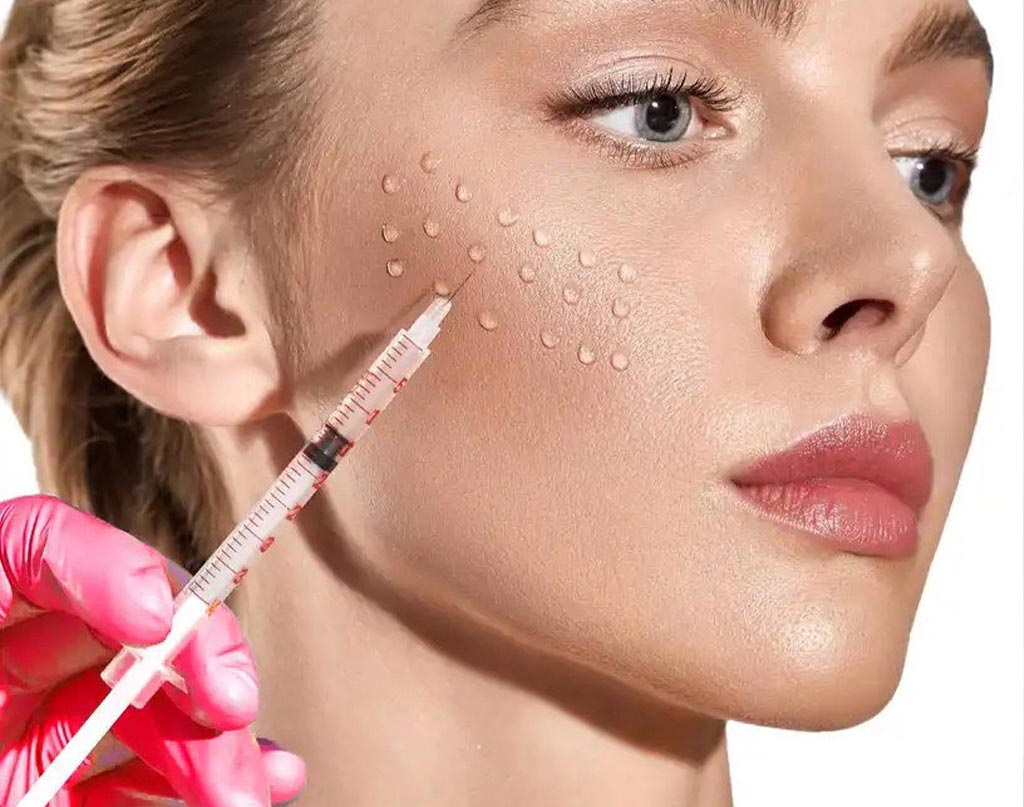
After the injections were done, I noticed something unexpected: the area around my cheeks had turned noticeably white and pale, and even looked slightly raised and puffy. The bruising I was mentally prepared for — but this I wasn't.
I asked the clinic coordinator about it, and she immediately asked: "Did you get anesthetic injections today?" When I said yes, she smiled and reassured me — this is a completely normal reaction and typically fades within about 2 hours.
Curious, I looked it up afterward, and here's what's actually happening:
The whiteness is caused by epinephrine (adrenaline) in the local anesthetic. Epinephrine is added intentionally to constrict blood vessels — it reduces bleeding during the procedure and helps the numbing effect last longer. When blood vessels contract, less blood flows to the surface, which is why skin turns pale.
The raised, puffy texture is called a wheal — a small temporary swelling formed when fluid is injected just beneath the skin's surface. It looks a little like a mosquito bite reaction and feels slightly firm to the touch. It's not an allergic reaction; it's simply the anesthetic fluid sitting in the tissue before it gets absorbed.
Both reactions are temporary and resolve on their own, usually within 30 minutes to 2 hours. The clinic didn't warn me about this in advance, which is why I wanted to write about it here — if it happens to you, don't worry. It's textbook-normal.
The Cannula Entry Point — I Got a Duoderm Patch
For the nasolabial fold treatment, the Revive was injected using a cannula rather than a needle. Cannulas are blunt-tipped and thread under the skin, which is gentler on tissue and reduces bruising compared to sharp needles.
After the procedure, the clinic placed a Duoderm patch over the cannula entry point on my face. I was told to leave it on for one full day before removing it. Duoderm is a hydrocolloid dressing that protects the tiny puncture site, keeps it moist for faster healing, and reduces the risk of irritation or infection.
If you've never had a cannula treatment before and wondered about the little patch they put on your face afterward — that's what it's for!
After the Treatment — Some Bruising, But Manageable
Skin booster injections involve many small needle punctures across the skin, so bruising is pretty common, especially on the cheeks where there are more blood vessels. Mine came out fairly spread out — also normal, and honestly less dramatic than I expected.
Tips to help bruising fade faster:
- First 48 hours → cold compress
- After 48 hours → switch to warm compress
- Apply arnica gel or cream
- Try a hirudin patch (available at Korean pharmacies)
- Avoid alcohol, saunas, and intense exercise — these increase circulation and can spread bruising further
What's Next — Revive or Radiesse for My Marionette Lines?
As I keep up with Revive for my smile lines, I've started noticing my marionette lines (Indian wrinkles) more. Now I'm debating whether to continue with Revive or try Radiesse for that area.
Here's how I'm thinking about the two — and remember, both are made by Merz Aesthetics:
| Revive Skinbooster | Radiesse | |
|---|---|---|
| Manufacturer | Merz Aesthetics | Merz Aesthetics |
| Main Effect | Deep hydration, skin elasticity, mild line softening | Volumizing, structural support, deeper wrinkle correction |
| How It Works | Stimulates skin regeneration and moisture retention | CaHA microspheres provide immediate volume + long-term collagen stimulation |
| Longevity | 6–9 months | 12–18 months |
| Look | Very natural, no added volume | More visible lift and volume |
| Best For | Overall skin quality, fine lines, surface hydration | Deeper folds, areas needing structural support |
| Downtime | Minimal | Slightly more bruising/swelling possible |
| Reversible | Yes, dissolves naturally | Not easily reversible |
My take: For the nasolabial area, Revive feels right for me — subtle, safe, and effective for my skin type. But marionette lines need more structural support, not just hydration, which is where Radiesse could be more effective. The fact that both come from the same trusted manufacturer (Merz) makes the idea of eventually trying Radiesse feel a lot less intimidating.
That said, the marionette line area has more complex blood vessel distribution, so I'll definitely be consulting carefully with my doctor before making any decisions.
This post is based on my personal experience. Results vary by individual. Please consult a qualified medical professional before any aesthetic procedure.